Last updated August 2026
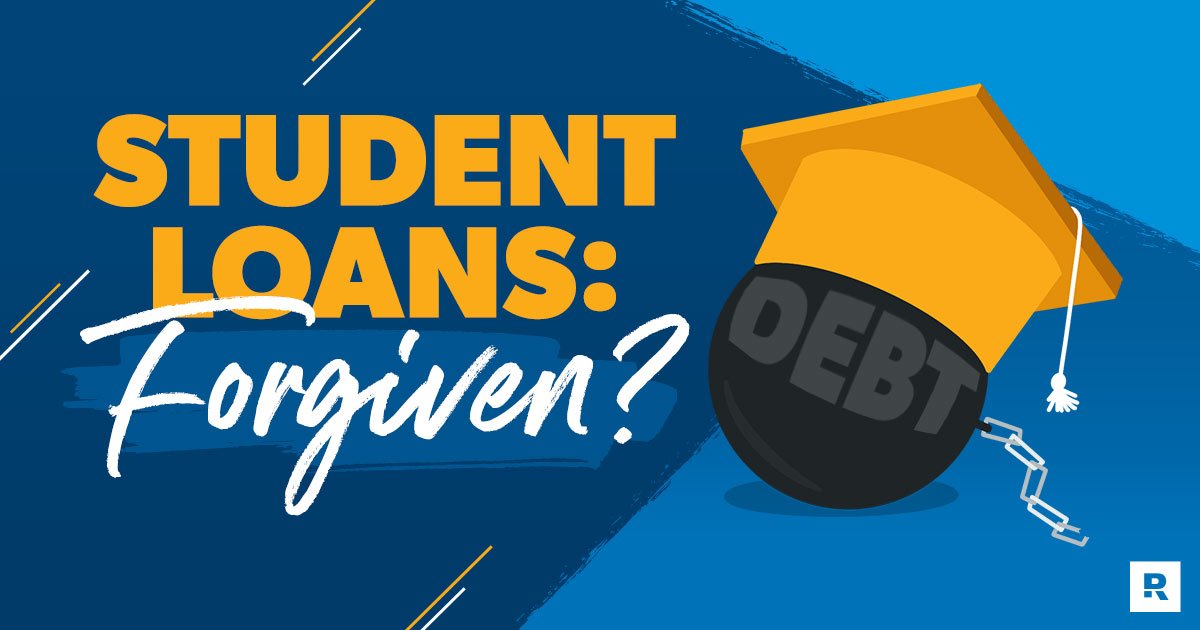
Student loan forgiveness has become one of the most confusing corners of personal finance, partly because the underlying law keeps changing and partly because so much online commentary conflates two very different things: the broad, one-time mass cancellation that dominated headlines a few years ago, and the narrower, permanent forgiveness programs that Congress wrote into law decades ago and that continue to operate regardless of who occupies the White House. The mass cancellation effort is dead — it never survived legal challenges. The permanent programs are not dead. They are still open, still processing applications, and still discharging debt, but the rules around them changed substantially in 2025 and 2026, and borrowers who assume the landscape looks the way it did a few years ago are likely to make costly mistakes.
The Legal and Legislative Backdrop
Two developments reshaped federal student loan policy heading into 2026. First, President Trump signed Executive Order 14235, “Restoring Public Service Loan Forgiveness,” in March 2025, directing the Department of Education to revise which employers count as qualifying for PSLF. The Department published a final rule on employer eligibility in October 2025, set to take effect July 1, 2026 — but federal courts vacated that rule the day before it was scheduled to apply, meaning it never actually affected a single borrower. Public school districts, state and public universities, and 501(c)(3) nonprofits remain qualifying employers under the standards that were already in place.
Second, and far more consequential, Congress passed the One Big Beautiful Bill Act (OBBBA) on July 4, 2025, a reconciliation law that rewrote the menu of income-driven repayment options available to federal borrowers. OBBBA created a new plan called the Repayment Assistance Plan (RAP) and set most existing income-driven repayment (IDR) plans on a path to phase out. Separately, a court vacated the Biden-era SAVE Plan’s final rule in March 2026, effectively ending SAVE outright; the Department of Education began notifying the roughly 7.5 million borrowers who had been enrolled in it that spring, directing them to choose a different plan.
The net effect is that 2026 is a genuine inflection point for federal student loans — not because forgiveness disappeared, but because the pathways to it changed shape.
Public Service Loan Forgiveness (PSLF)
PSLF remains the most well-known and, for many borrowers, the most valuable forgiveness program, and it is fully active. Created by Congress rather than by executive action, it forgives the remaining balance on Direct Loans after a borrower makes 120 qualifying monthly payments — the equivalent of ten years — while working full-time for a qualifying employer, generally a government agency at any level or a 501(c)(3) nonprofit.
Several structural details matter more than ever given the surrounding changes. Only payments made under a qualifying repayment plan count; the standard 10-year repayment plan does not qualify, since the loan would be paid off in full before the ten years of PSLF service concluded, and the newer Tiered Standard Plan created alongside RAP also does not count toward PSLF. Borrowers need to be on an income-driven plan — and RAP itself does count as a qualifying plan for PSLF purposes, so borrowers who move onto RAP do not lose PSLF eligibility, even though RAP’s own independent forgiveness timeline runs far longer. Borrowers must submit the PSLF form periodically, generally each year or whenever they change employers, and must still be working for a qualifying employer at the moment they submit their final form.
A notable recent addition is the PSLF “buyback” option: borrowers who have already accumulated 120 months of qualifying employment but who have gaps in their payment count because of an ineligible deferment or forbearance period can now retroactively buy back those months, converting them into qualifying payments if doing so would trigger forgiveness. This closes a gap that previously stranded borrowers who were, functionally, done with their service obligation but technically short on qualifying payments due to administrative loan pauses.
One group has lost ground, however: Parent PLUS loans issued on or after July 1, 2026 will not have a path to PSLF at all, since RAP — the only IDR option available for loans disbursed after that date — is not available to Parent PLUS borrowers. Parents who already hold Parent PLUS loans and are pursuing PSLF still have a workable path through Income-Based Repayment (IBR), but they need to consolidate those loans and get onto IBR before July 1, 2028, when several legacy IDR plans stop accepting new enrollees.
On the tax side, PSLF discharges remain permanently tax-free at the federal level. This protection comes from a separate, older provision of the tax code (26 U.S.C. §108(f)(1)) that excludes loan discharges tied to a required period of employment in public service — a different legal basis than the temporary pandemic-era tax exclusion that covered other forgiveness types, which is why PSLF was unaffected when that temporary exclusion expired.
Income-Driven Repayment (IDR) Forgiveness
Separate from PSLF, most federal IDR plans have always included a built-in forgiveness feature: after a fixed number of years of qualifying payments, any remaining balance is canceled outright, regardless of employer. Historically this ranged from 20 to 25 years depending on the specific plan and loan type. This form of forgiveness is still available and still processing, but it looks different than it did even two years ago.
The SAVE Plan — the Biden administration’s flagship IDR plan, which had offered some of the lowest payments and most generous interest subsidies of any plan to date — is gone as of the March 2026 court ruling. Borrowers who were enrolled in SAVE have had to choose a replacement plan, and most financial advisors and loan attorneys have pointed borrowers toward Income-Based Repayment (IBR) as the most stable remaining legacy option, since it is grounded directly in statute rather than agency rulemaking and is therefore less vulnerable to the kind of litigation that unwound SAVE.
Replacing the older menu of plans is RAP, which became available for enrollment on July 1, 2026 and is now the default IDR option for any borrower taking out a new federal loan after that date. RAP works differently from its predecessors in several ways. Rather than basing payments on “discretionary income” measured against the federal poverty line — the method used by IBR, PAYE, and ICR — RAP bases payments directly on a borrower’s adjusted gross income (AGI), sorted into income bands. The applicable rate starts at 1% of AGI for the lowest tier and rises by one percentage point for every additional $10,000 of income, capping at 10% for AGI above $100,000; borrowers with AGI of $10,000 or less pay a flat $10 monthly minimum. Each dependent claimed on a borrower’s tax return reduces the monthly payment by $50, and if a borrower’s full on-time payment would reduce their principal by less than $50, the government makes up the difference — a structural fix meant to eliminate the negative amortization problem that plagued some older IDR plans, where a borrower’s balance could actually grow over time despite making every required payment.
RAP’s forgiveness timeline is longer than what most legacy IDR plans offered: 360 qualifying monthly payments, or 30 years, compared to the 20- or 25-year timelines under IBR, PAYE, and ICR. Prior payment history under those older plans does carry over and count toward RAP’s 30-year clock, but the relationship is one-directional — months spent repaying under RAP do not count backward toward a legacy plan’s shorter forgiveness timeline. This makes RAP something borrowers should treat as a long-term commitment rather than a plan to hop onto temporarily. Complicating matters further, taking out any new federal loan on or after July 1, 2026 locks a borrower’s entire loan portfolio, including older balances, into RAP as their only IDR option going forward — a detail with real consequences for anyone currently in school and still borrowing.
The legacy plans are not disappearing overnight. PAYE and ICR, along with what remains of SAVE-adjacent processing, are set to phase out for existing borrowers by July 1, 2028, at which point those borrowers will need to have transitioned to either IBR or RAP.
The Tax Question That Changed for 2026
Perhaps the single most consequential shift for borrowers approaching IDR forgiveness is a change in tax treatment that has nothing to do with OBBBA or the courts. The American Rescue Plan Act of 2021 made most forms of student loan forgiveness federally tax-free, but only for loans discharged between December 31, 2020 and December 31, 2025 — a five-year window covering tax years 2021 through 2025. Congress did not extend that exclusion, so as of January 1, 2026, most IDR forgiveness is once again treated as taxable cancellation-of-debt income at the federal level, potentially generating a large one-time tax bill in the year a balance is discharged.
This change does not touch every program, though, and the distinction matters. PSLF remains permanently tax-free, for the statutory reasons described above. Teacher Loan Forgiveness also remains tax-free. Discharges tied to death or total and permanent disability remain excludable from income as well, though starting in 2026 claiming that exclusion requires including the borrower’s Social Security number — and a spouse’s, if married — on the relevant tax return. What lost its tax-free status is the general IDR forgiveness that occurs after 20 to 25 years (or, going forward, 30 years under RAP) simply by virtue of time and qualifying payments, independent of any employment requirement. Borrowers approaching that milestone in 2026 or later should budget for the possibility of a significant tax liability the year their balance is discharged, and should be aware that state tax treatment varies independently of federal law — several states tax forgiveness that the federal government exempts, and vice versa.
Other Standing Forgiveness and Discharge Programs
Beyond PSLF and IDR forgiveness, several narrower but still-active federal programs remain in place. Teacher Loan Forgiveness offers up to $17,500 in forgiveness for teachers who work five consecutive years in a low-income school or educational service agency, and remains distinct from PSLF (a borrower generally cannot double-count the same years of service toward both programs, though they may pursue Teacher Loan Forgiveness first and PSLF afterward). Borrower Defense to Repayment allows borrowers to have their loans discharged if their school engaged in fraud or certain other misconduct, and claims continue to be reviewed and paid. Closed School Discharge cancels loans for students whose school shut down while they were enrolled or shortly after they withdrew. Total and Permanent Disability (TPD) discharge remains available for borrowers unable to maintain substantial gainful employment due to a disabling condition.
What This Means for Borrowers
The practical takeaway for 2026 is that forgiveness has not ended, but it has become more conditional, more plan-specific, and more time-sensitive than it was even a year or two ago. Borrowers who were counting on SAVE need to actively choose a replacement plan rather than assume anything continues automatically. Borrowers pursuing PSLF should confirm they are on a qualifying plan — RAP or IBR, not the standard or tiered standard plans — and should look into the buyback option if forbearance or deferment periods left gaps in their payment count. Borrowers approaching IDR forgiveness on the older 20- or 25-year timelines should factor in the return of federal taxation on that discharge and, where relevant, consult a tax professional about timing and potential insolvency exclusions. And anyone still borrowing, or considering consolidating existing loans, should understand that any new federal borrowing after July 1, 2026 forecloses access to the older IDR plans entirely, making RAP the only income-driven option for their full loan balance going forward. Given how quickly this landscape has shifted twice in the space of a single year, the most reliable move for any borrower is to verify current plan availability and program rules directly at studentaid.gov before making a decision that locks in a repayment path for years or decades to come.

 freeman4u16