Last updated August 2026
Earning a medical degree remains one of the most expensive graduate paths in the United States, with total four-year costs at many private schools now exceeding $300,000 once tuition, fees, and living expenses are combined. That price tag has pushed both medical schools and outside organizations to expand the range of scholarships available to students, from full-ride institutional programs to small, specialty-specific essay awards. Because funding for medical school comes from so many different sources — the school itself, the federal government, professional associations, and private donors — building a realistic financing plan usually means understanding several overlapping categories of aid rather than searching for a single “best” scholarship.
Merit-Based Institutional Scholarships
The most common category of medical school scholarship is awarded directly by the school itself, based primarily on academic merit: undergraduate GPA, MCAT score, and sometimes leadership or research experience. Most schools that offer merit aid review every admitted student automatically using the information already submitted through the American Medical College Application Service (AMCAS), so there is typically no separate application required. The University of Miami’s Miller School of Medicine, for example, automatically considers every admitted student for merit scholarships based on their AMCAS application, with individual awards ranging from $15,000 up to full tuition and fee coverage. Vanderbilt University School of Medicine similarly offers merit-based awards tied to academic achievement, leadership potential, and a demonstrated commitment to underserved populations.
Merit awards vary enormously in size. Many range from a few thousand dollars a year up to half or full tuition, and some are renewable each year contingent on maintaining a certain GPA, while others are guaranteed for all four years regardless of subsequent performance. Because merit scholarships are usually awarded at the point of admission, the single biggest driver of eligibility is the strength of the application itself — there is generally little advantage to a separate scholarship essay or interview process for these awards.
Need-Based Institutional Scholarships
A second major category is based purely on demonstrated financial need rather than academic performance. Schools that emphasize need-based aid typically require applicants to submit the CSS Profile, and sometimes the FAFSA, in addition to their standard admissions application. Stanford University School of Medicine has moved entirely to a need-based model, eliminating merit scholarships altogether so that all institutional aid is calculated according to a family’s documented financial circumstances. Washington University School of Medicine in St. Louis takes a similar approach, using substantial need-based scholarships to cover full tuition for more than 70 percent of students in a given class — a structure that can save an individual student tens of thousands of dollars annually.
Need-based aid packages are typically reassessed every year, since a family’s financial circumstances can change during the course of a four-year degree. Students applying under this model should expect to submit updated financial documentation annually rather than receiving a fixed scholarship amount locked in at admission.
Full-Tuition and “Tuition-Free” Medical Schools
In the past several years, a small but growing number of medical schools have moved to eliminate tuition altogether for most or all students, usually funded by large philanthropic gifts to the school’s endowment. NYU Grossman School of Medicine was an early mover in this space, offering a full-tuition scholarship to every enrolled student regardless of merit or financial need since 2019, and has since expanded that commitment to also help cover health insurance costs. Albert Einstein College of Medicine adopted a similar full-tuition model after a major endowment gift. Johns Hopkins University School of Medicine now offers full financial aid packages — covering tuition, living costs, and fees — to students from families earning under a set income threshold, with partial tuition support extended further up the income scale, funded through a large gift specifically earmarked for this purpose. Yale School of Medicine has announced that, starting with the 2026 entering class, students from families earning under $200,000 annually will receive free tuition, while those from families earning under $100,000 will have their full cost of attendance covered, including housing and meals.
These programs represent a meaningful shift in how elite research-focused medical schools think about affordability, but it’s worth noting they remain the exception rather than the rule. Most medical schools, including many highly ranked ones, still rely on a mix of merit and need-based scholarships layered on top of loans rather than offering universal free tuition.
Service-Commitment Scholarships
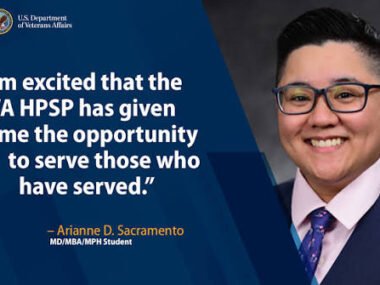
A distinct category of medical scholarship ties funding to a post-graduation service obligation, typically in exchange for full or near-full tuition coverage plus a living stipend. The U.S. military’s Health Professions Scholarship Program (HPSP), offered through the Army, Navy, and Air Force, covers tuition and fees and provides a monthly stipend in exchange for a period of active-duty service as a military physician after residency, with the length of the commitment generally matching the number of years of scholarship support received. The National Health Service Corps (NHSC) Scholarship Program operates on a similar principle for civilian primary care: it covers tuition, fees, and a living stipend in exchange for a commitment to practice in a federally designated Health Professional Shortage Area after residency.
Some institution-specific programs follow the same logic on a smaller scale. The Abigail Geisinger Scholars Program, for instance, covers full tuition and living expenses for select students who commit to two to four years of service, often in primary care, after they complete training. Programs like Emory University School of Medicine’s Woodruff Fellowships combine full tuition and a stipend for a small number of students each year, selected for character, academic achievement, and leadership rather than a service commitment. These trade-off scholarships can dramatically reduce or eliminate debt, but students should weigh the value of the award carefully against the flexibility they may be giving up in choosing a specialty, employer, or practice location after graduation.
National and Professional Organization Scholarships
Outside of the medical schools themselves, a wide range of national organizations offer scholarships that students can apply for independently, regardless of which school they attend. The American Medical Association Foundation, specialty-specific professional societies, and organizations like National Medical Fellowships (NMF) all maintain scholarship programs. NMF specifically funds students from historically underrepresented backgrounds in medicine — including Black, Hispanic/Latino, Native American, and some Asian-American and Pacific Islander students — with awards generally in the $5,000 to $7,000 range, distributed based on academic merit, leadership, and a demonstrated commitment to underserved communities. The William G. Anderson, DO, Scholarship Fund supports osteopathic medical students, particularly those from minority backgrounds, in a similar range.
Other national awards are open more broadly. The Dolores Zohrab Liebmann Fellowship funds full tuition plus a stipend for students showing outstanding academic promise across a range of graduate fields, including medicine. Smaller, private-sector scholarships — such as corporate or foundation-sponsored awards for students pursuing healthcare careers — typically range from $1,000 to $10,000 and often require a short essay rather than an extensive application. Because these smaller awards are numerous but modest, many students apply to a large batch of them simultaneously, reusing and lightly adapting a single strong personal statement across multiple applications.
Diversity, Identity, and Background-Specific Scholarships
Because medicine continues to work toward a physician workforce that reflects the diversity of the patient population, a substantial share of available scholarships are targeted at students from specific backgrounds: racial and ethnic minorities underrepresented in medicine, first-generation college students, women in certain specialties, LGBTQ+ students, students from rural or low-income communities, and students who are the first in their family to pursue a graduate degree. These scholarships are funded by a mix of professional associations, individual schools, and private foundations, and eligibility criteria can be quite specific, so students should read requirements carefully rather than assuming broad categories like “minority scholarship” apply uniformly across programs.
Regional, State, and School-Specific Scholarships
A significant number of scholarships are tied to geography rather than merit, need, or identity. Many state governments and state medical societies fund scholarships or loan-repayment programs for students who commit to practicing in that state, particularly in rural or underserved areas, after residency. Similarly, some medical schools reserve a portion of their scholarship funds specifically for in-state residents or for students who grew up in the school’s home region. Students researching scholarships are often advised to check not just national databases but also their home state’s medical society, their undergraduate institution’s financial aid office (which sometimes maintains funds specifically for alumni continuing to graduate or professional school), and any regional foundations tied to their hometown.
Where to Find Medical School Scholarships
Because scholarship funding is so decentralized, most successful applicants pull from several sources simultaneously rather than relying on any single database. The Association of American Medical Colleges (AAMC) maintains financial aid resources and connects students with scholarship information as part of its broader guidance for applicants. Several universities, including Brown University, maintain publicly accessible scholarship databases organized by category — regional affiliation, specialty interest, and ethnic, religious, or cultural background — that are useful even for students not attending that particular school. Each individual medical school’s financial aid office is also a critical resource, since many merit and need-based institutional scholarships are only listed on the school’s own site and are not aggregated anywhere else.
Because researching and applying to scholarships takes real time — particularly for essay-based awards — most advisors recommend starting the search six to nine months before funding is actually needed, ideally while still in the premed years so that scholarships tied to the application cycle itself aren’t missed.
Putting It Together
For most students, medical school will ultimately be financed through a combination of these categories rather than a single source: an institutional merit or need-based scholarship from the school itself, supplemented by smaller national or identity-based awards, and, for some students, a service-commitment program that trades a future work obligation for substantial funding now. Because scholarship structures, income thresholds, and dollar amounts change from year to year — as the recent wave of full-tuition announcements at schools like Yale and Johns Hopkins demonstrates — prospective students should treat any specific figures as a starting point and confirm current details directly with each school’s financial aid office and the sponsoring organization behind any national or regional award before building a final financing plan.


 freeman4u16